
Author: eclectic_4gz7ka

  • From Reflection to Transformation: How Looking Back Can Fuel Personal Growth

    From Reflection to Transformation: How Looking Back Can Fuel Personal Growth

    In our fast-paced lives, pausing to reflect can feel counterintuitive—why dwell on the past when the future demands our full attention? Yet, as Looking Back to See Ahead illustrates, thoughtful reflection is the engine of personal growth. By revisiting key moments—our own “hinge years”—we uncover the convergences of choice, challenge, and chance that have shaped our paths. This self-awareness transforms seemingly random experiences into coherent lessons, empowering us to make wiser decisions going forward.

    Reflection sharpens our ability to recognize patterns. When you look back at career pivots, relationship crossroads, or creative breakthroughs, you start to see recurring themes: how constraints sparked your most innovative ideas, or how moments of crisis revealed hidden strengths. This pattern-spotting isn’t mere nostalgia—it’s data gathering for your life’s next chapter. Just as the book uncovers historical “rhymes,” personal reflection reveals the refrains of your own story, guiding you toward choices that align with your deepest values and aspirations.
    Moreover, reflection fosters resilience. Consciously processing past setbacks—rather than glossing over them—allows you to extract insights about what works, what doesn’t, and how you respond under pressure. By framing missteps as learning opportunities, you build a growth mindset, turning obstacles into stepping-stones. This shift in perspective not only eases self-judgment but also emboldens you to embrace future uncertainty with confidence.

    Finally, reflection connects your personal narrative to a larger human story. Recognizing that your challenges echo those of eras past—whether in technological upheavals or social transformations—reminds you that growth is both individual and collective. When you see how others navigated their own hinge years, you gain empathy and inspiration for your journey. In this way, looking back doesn’t anchor you in what was; it propels you into what can be—equipped with the wisdom to shape a more purposeful, resilient self.
  • How History’s Hinge Years Guide Our Tomorrow

    How History’s Hinge Years Guide Our Tomorrow

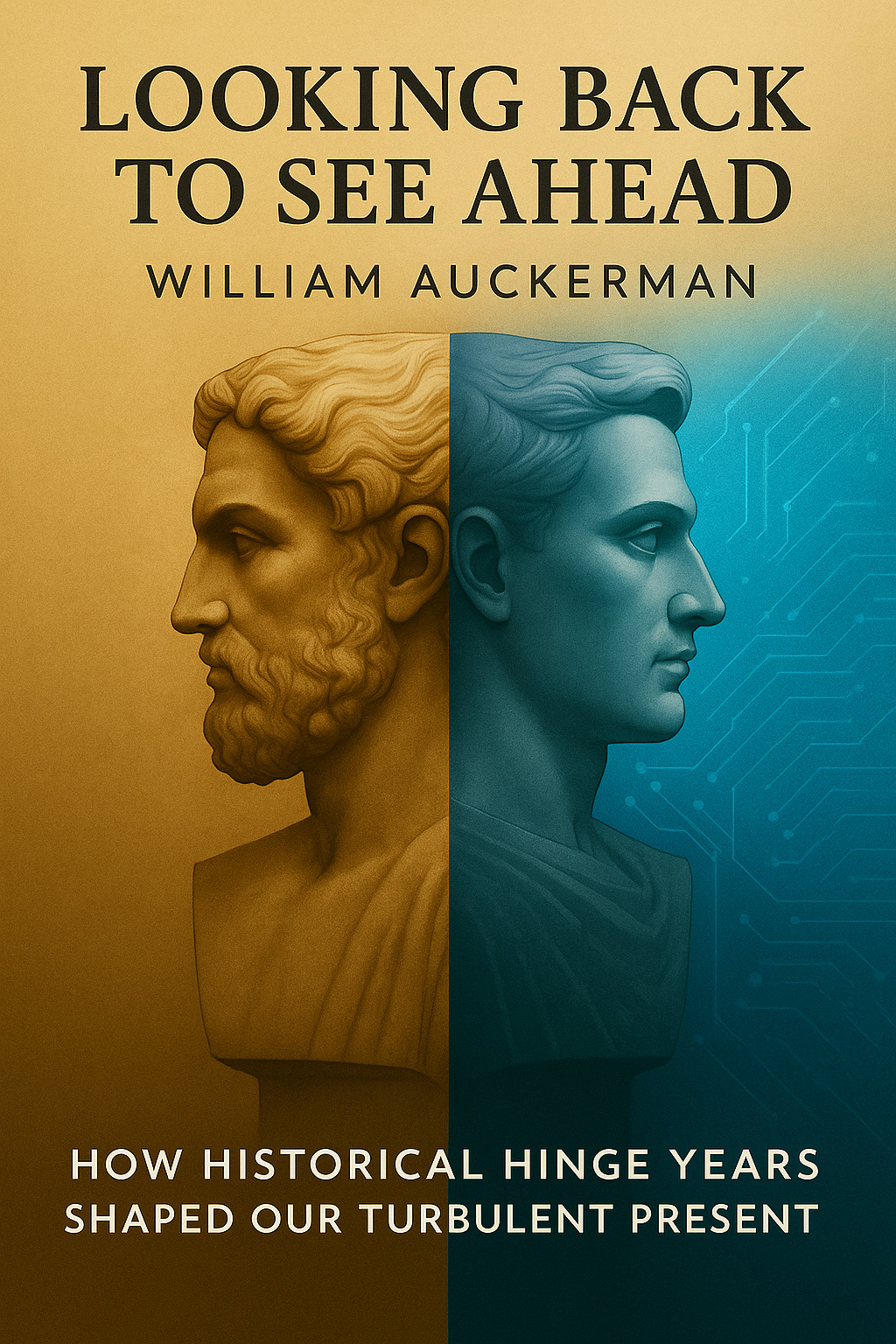
    Every so often, history quietly lays down the rails that will carry us into an entirely new era. In Looking Back to See Ahead, we spotlight those “hinge years”—from the dawn of credit cards in 1950 to the first ARPANET message in 1969—that may have seemed unremarkable at the time but, in retrospect, proved transformative. By revisiting these pivotal moments, we learn to recognize the hidden architectures of change: the investments, inventions, and cultural shifts that converge to reshape our world.

    Understanding convergence is at the heart of this approach. Rather than viewing technological breakthroughs, political upheavals, or cultural trends in isolation, the book shows how their intersections act as multipliers—generating outcomes far greater than the sum of their parts. When a new medium like television met the politics of McCarthyism, it reshaped public attention; when Cold-War funding met Turing’s questions about machine intelligence, it seeded the future of computing. Seeing these overlaps gives us a powerful lens for spotting tomorrow’s transformations in our own lives and work.

    Crucially, this isn’t just an exercise in historical trivia. Each chapter distills what we call “rhymes of history” into actionable principles—from the Paradox Principle (constraints spur creativity) to the Visibility Principle (make the invisible visible). These frameworks turn abstract insights into practical strategies you can apply when navigating projects, organizations, or personal goals. By learning to audit your attention, embrace constraints, and scan the periphery for emerging trends, you gain both foresight and the tools to act.

    Finally, the author’s personal journey—from a child of the Baby Boomer generation to decades living in Tokyo—reminds us that global currents always find their way into individual lives. His anecdotes anchor grand narratives in human experience, proving that understanding history isn’t about detached analysis but about empowering ourselves to shape what comes next. When we look back with intention, we’re not just observers of the past—we become architects of our future.